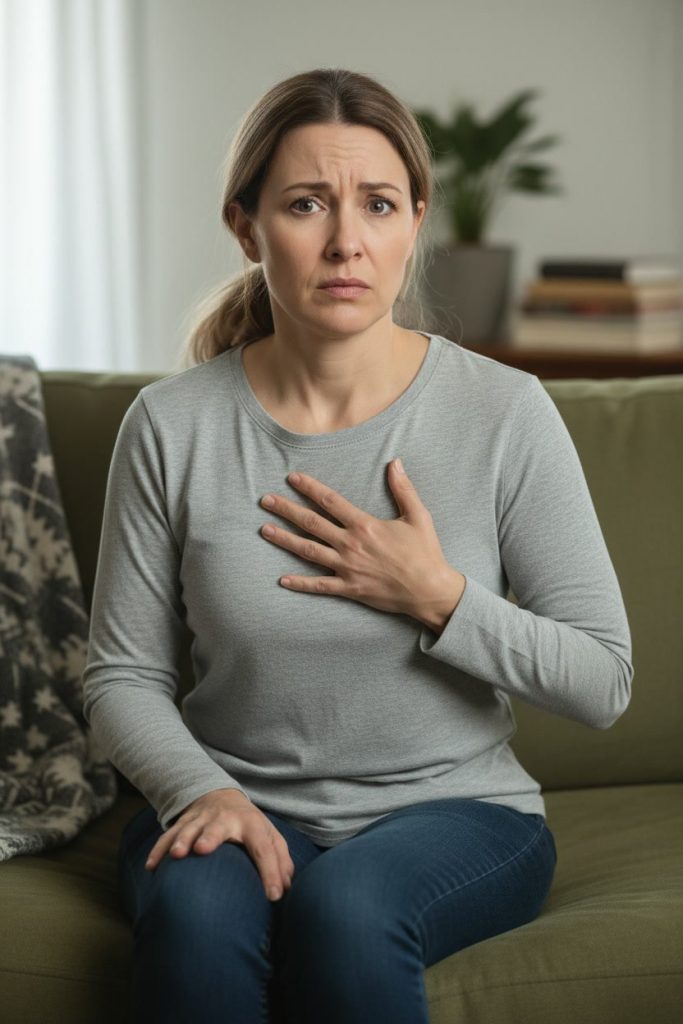
Heart attacks are often imagined as a sudden, dramatic event. But studies show that many people, especially women, notice warning signs days or even weeks before. These symptoms are easy to dismiss as stress or tiredness. Recognizing them can save a life.
Important: if you have chest pain or pressure, pain spreading to the arm, jaw or back, shortness of breath, cold sweat or nausea right now – call emergency services immediately. Don’t drive yourself.
1. Unusual fatigue
Sudden, extreme tiredness – where simple tasks like making the bed or climbing stairs feel exhausting – is the most commonly reported early sign, particularly in women.
2. Shortness of breath
Getting out of breath doing things that used to be easy, or feeling breathless when lying down, can mean the heart isn’t getting enough blood and oxygen.
3. Chest discomfort
Not always sharp pain. It can feel like pressure, tightness, squeezing, burning or fullness, which comes with effort and goes away with rest (angina). Any new chest discomfort needs a doctor.
4. Pain in other parts of the upper body
Discomfort in one or both arms, the back, neck, jaw or stomach. Women in particular may feel pain between the shoulder blades or in the jaw rather than in the chest.
5. Sleep problems and anxiety
Many women report insomnia and a strange sense of anxiety or “doom” in the weeks before a heart attack.
6. Cold sweats, dizziness and nausea
Breaking into a cold sweat without heat or exercise, feeling lightheaded, or indigestion-like nausea can be the body reacting to stress on the heart.
Know your risk factors
- High blood pressure and high cholesterol
- Diabetes
- Smoking
- Overweight and inactivity
- Family history of heart disease
- Chronic stress
Protect your heart
- Check your blood pressure, cholesterol and blood sugar regularly.
- Move at least 150 minutes a week – brisk walking counts.
- Eat more vegetables, whole grains, fish and olive oil; less salt and processed food.
- Stop smoking – risk drops quickly after quitting.
- Sleep 7–8 hours and find ways to manage stress.
Any of these warning signs can have other causes – but don’t guess. If you notice new symptoms, see a doctor soon. If they are severe or sudden, call emergency services right away.
This article is for general information and does not replace medical advice.